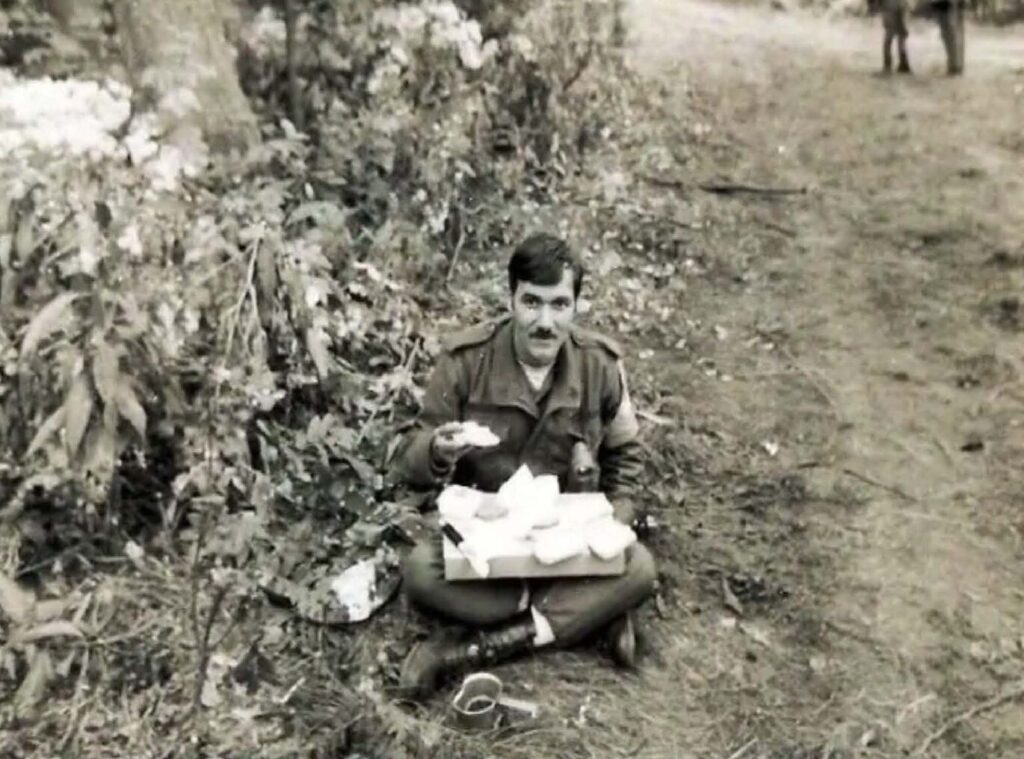
A Tribute to Striper Ronald Hatcher
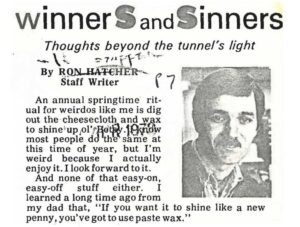
To those who worked with Ron Hatcher, he was a cornerstone of the newsroom during the same era as legendary columnists like Al Ricketts. Stars and Stripes readers in Korea and Tokyo knew Ron for his tenacity to uncover the story-behind-the-story—never satisfied with a sanitized or whitewashed version. To those who sat across from him in a game of Scrabble or Diplomacy, he was a master strategist and fierce tactician who knew every word in the Official Scrabble Dictionary. To his students at the Defense Information School (DINFOS), he demanded an attentive mind and sharp writing skills that met the standards of the AP Style Guide while offering plenty of encouragement along the way.
Early Life and Global Service
Hatcher’s Army career was characterized by a rare combination of technical precision and a “Renaissance man” spirit. Born on December 11, 1947, in Springfield, Illinois, his early years laid the foundation that eventually became a springboard for him to explore the world. After graduating from high school in 1966 and attending Lincoln Land College, his quest to travel the globe drove him to enlist in July 1967.
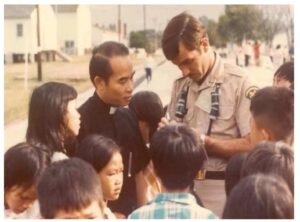
His first assignment was at Camp Zama, Japan, where he served as a Communications Center Specialist from 1967 to 1969. Immersing himself in Japanese culture and dedicating himself to learning the language, his first overseas experience also marked a significant turning point in his personal life upon meeting and later marrying Toshiko Shimada in 1969, his wife of nearly 40 years.
Transition to Journalism
After a few years in the Army Reserves, Hatcher’s yearning for adventure compelled him to re-enlist in 1973. This return to active duty marked the transition from being a communications specialist to entering the field of journalism. Assigned as an Information Specialist at Fort Belvoir, Virginia, he covered music and entertainment, developing a taste for everything from honky-tonk to R&B—even moonlighting as a disc jockey.
In 1974, he completed the Noncommissioned Officer Academy, followed by specialized training at the Defense Information School (DINFOS) in 1975. His time there sharpened his journalistic tools and instilled the creed that the pen is a mightier force than the sword.
Reporting from the Front Lines
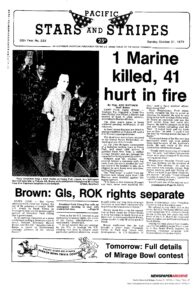
In 1977, he was assigned to the Yongsan Garrison in Korea as a Senior Writer. Embracing his role as a soldier’s newsman, when a typhoon struck Camp Fuji, Japan, in 1979, Hatcher hitched a helicopter ride to cover the story without authorization. He detailed first-hand accounts from the Marines—much to the dismay of his chain of command.
By 1979, Hatcher returned to Japan for the assignment that defined his career: the Tokyo bureau of Pacific Stars & Stripes. Serving as news editor—a position not normally held by military staff—he navigated the internal debates of editorial censorship and the tensions between hard-nosed reporting and military public affairs.
Shaping the Next Generation
In 1982, Hatcher returned to Fort Harrison as a DINFOS Journalism Instructor. He was beloved by his students for challenging their skills and demanding the same precision he expected of himself. His passion for journalism extended beyond the base; he also worked as a sports reporter for the Anderson Herald-Bulletin for a decade.
His final active-duty chapter involved high-level strategic communication, leading after-action reports for Operation Desert Storm and Operation Just Cause. He retired in 1992 at the rank of Master Sergeant (E-8). You can learn more about similar service stories in our online archives.
A Lasting Legacy
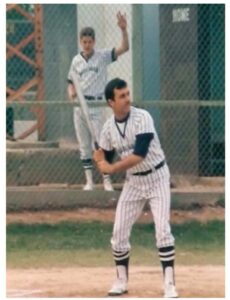
Post-retirement, Ron remained a technical writer and served as the Editor of the Stars and Stripes Newsletter until his death in 2008. A “Renaissance man” to the end, he was a devotee of baseball, a talented photojournalist, and an avid reader who frequently quoted Mark Twain.
Whether he was editing a front-page story or playing a high-stakes game of Scrabble, Ron Hatcher approached life with excellence and a spirit of adventure. To see more stories like Ron’s, visit our Striper Spotlights category.
Note: This spotlight was shared by Ronald Hatcher’s daughter, Emiko Kreklau. The Stars and Stripes National Museum and Library extends a special thank you to Emiko for providing the personal stories, information, and photos that make this tribute possible.